If you wear a hat or helmet for most of your working day, your haircut is not really the one in the shop mirror. It is the one that appears when the hard hat, ball cap, or motorcycle helmet comes off in the parking lot. In Gastonia, that covers a lot of men: construction and warehouse crews, landscapers in summer heat, delivery drivers, and riders who commute on two wheels. At Union Road Barbers, hat wearers who choose cuts built for compression spend less time fighting the mirror and more time just getting on with the day.
The physics are unforgiving. Hours of pressure flatten the top, sweat mats the sides, and the band line prints itself across your hair. A cut that needs volume and careful styling to look right will lose to a helmet every single time. The comparison below lays out the genuine options side by side, so you can pick by how you live rather than by a photo of someone who never wears a hat.
What hats and helmets do to a cut
Compression is only half of it. The band traps heat and moisture against the scalp, which speeds up oiliness, itching, and odor in summer. Friction at the band line can break shorter hairs and irritate the skin, especially with a hard hat suspension or a tight helmet liner worn daily. Long hair has the opposite problem: it tangles, pulls at the tie point, and emerges in a crease that no hand-styling fully removes. None of this means hat wearers get bad haircuts. It means the cut has to be judged by its recovery, meaning how it looks sixty seconds after the hat comes off with nothing but your hands to fix it.
| Cut option | Recovery after a hat | Upkeep | Watch out for |
|---|---|---|---|
| Short crop with texture | Excellent. Damp hands and a quick tousle restore it in under a minute. | Trim every 3 to 4 weeks. | Too much product before the hat goes on turns to paste in heat. |
| Buzz cut or very short fade | Excellent. Almost nothing to flatten. | Frequent short trims to stay tidy, but each visit is fast. | Sunburn on a newly exposed scalp. Use sunscreen or the hat itself without breaks at first. |
| Classic side part, medium length | Fair. The part survives, volume does not. Needs water and product to revive. | Trim every 4 to 5 weeks. | Band crease sits right at the part for some head shapes. Tell your barber where your band sits. |
| Longer top, styled with volume | Poor. Flattens completely and creases at the band line. | Daily styling plus regular trims. | Best saved for men who wear a hat only occasionally, not all shift. |
| Long hair worn tied back | Fair if tied low and loose, poor if tied high and tight. | End trims and serious detangling. | Tight ties plus helmet pressure can pull at the hairline. Rotate the tie position. |
The sixty-second recovery routine
Keep it simple enough to do at a truck door. When the hat comes off, do not immediately comb everything flat, which locks in the crease. Instead, wet your hands lightly, run them against the flat pattern to lift the hair, shake your head once, and then settle the hair with your fingers in its normal direction. A pea-sized amount of matte product, added only after the hat is done for the day, restores a finished look without the greasy band-line ring you get from product applied in the morning and cooked under a hat. If your scalp itches by mid-shift, the fix is usually hygiene, not styling: wash the hat band or helmet liner on the maker's schedule, let it dry fully, and rinse your hair with water on the sweatiest days even when you skip shampoo.

Telling your barber where the band sits
Bring the hat. Seriously. Putting your actual work hat or helmet on in the shop for ten seconds shows the barber the band height, the pressure points, and the exact crease line. A barber can then keep the fade's transition above or below that line on purpose, leave a touch more length where the band rubs, or talk you out of a style whose best feature sits exactly where your hard hat lives. Riders should mention helmet use too, because a snug full-face helmet argues for shorter sides than a ball cap does. In Gastonia's summers, also ask about sweat. A cut and routine that work in April can fail in August humidity, and a slightly shorter seasonal version of your normal cut is a legitimate plan, not a surrender.
Common questions
Will wearing a hat all day make my hair fall out?
Normal hat and helmet wear does not cause pattern hair loss. Very tight, dirty gear plus constant pulling can break hair and irritate the scalp, which is fixable with fit and cleaning.
Should I put product in before putting my hat on?
Usually no. Heat and pressure spread it unevenly and leave residue on the band. Style after the hat comes off for the day, with a small amount on damp hands.
How often should I wash a helmet liner or hat band?
Follow the maker's guidance, and do it more often in summer. A liner that smells when dry is overdue, and a clean liner prevents most mid-shift itching.
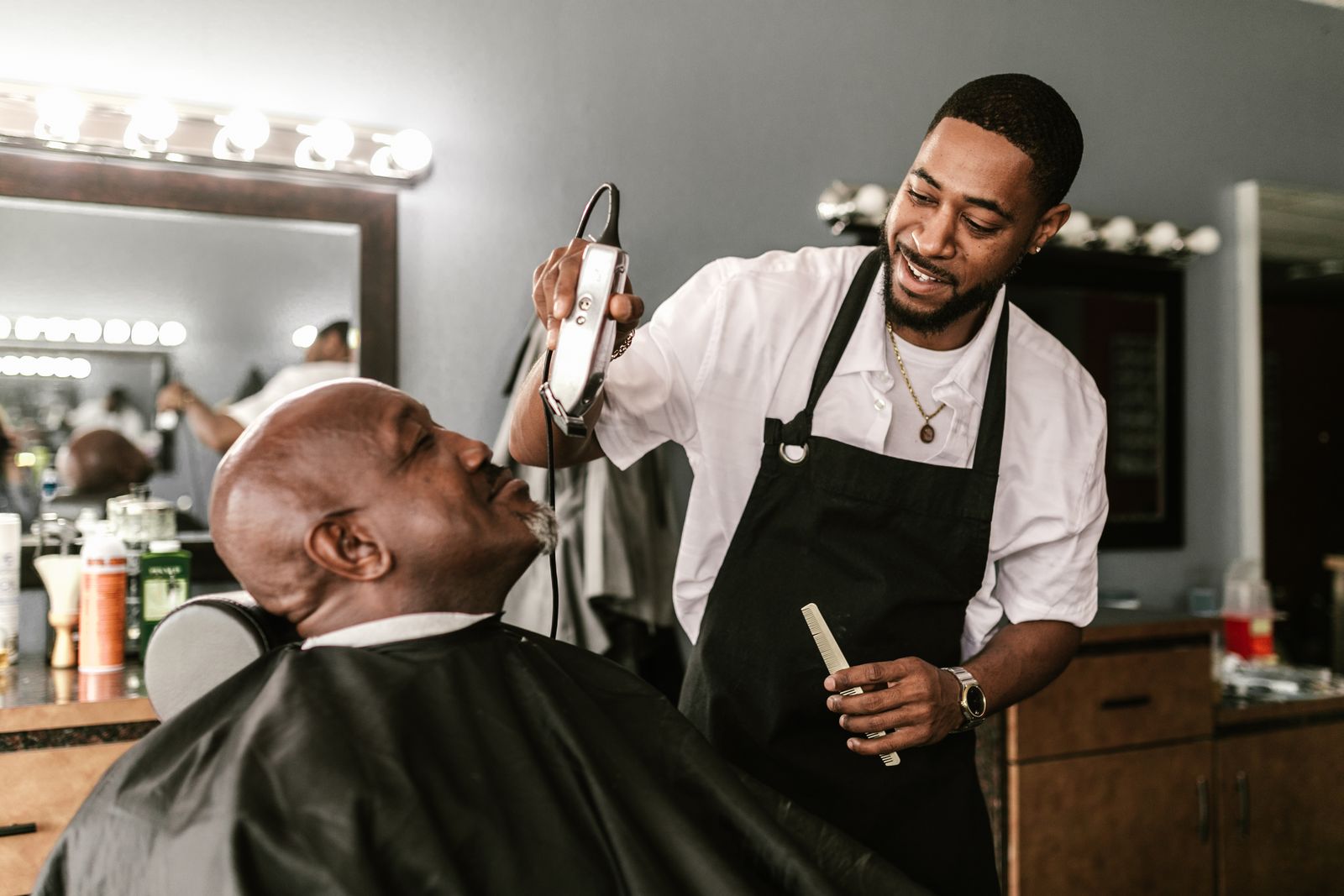
Photos in this guide are representative stock images.
← All guides from Union Road Barbers← Back to Union Road Barbers